Source Disposable PCR Plate for Molecular Biology and Lab Research
Find and compare 30 Disposable PCR Plate options from verified suppliers. These 96-well plates feature medical-grade polypropylene, sterile treatment, and high chemical stability for liquid handling and assay use in laboratories and hospitals.
Key considerations
Products List


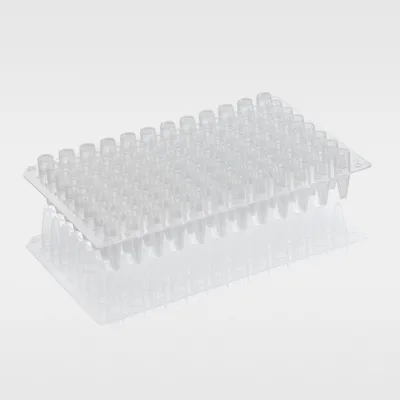


Lab Supplies Medical Disposable 0.1ml 0.2ml Transparent White PCR Plate
$0.25 - $0.30
MOQ: 5000 Pieces


96-Well 0.2ml PCR Plates, Non-Sterile, Half-Skirted, Dnase & Rnase Free, Clear,
$0.01 - $0.80
MOQ: 10000 Pieces


Comprehensive Sourcing Guide
Strategic Sourcing Guide for Disposable PCR Plates
Understanding Technical Specifications and Variants
When sourcing disposable PCR plates, buyers must first navigate the diverse technical landscape defined by well geometry, volume capacity, and skirt configurations. The market offers a range of models designed to meet specific thermal cycling and liquid handling requirements. A primary distinction lies in the well shape and quantity. Standard configurations typically feature 96 wells, which is the industry norm for high-throughput screening and routine molecular biology workflows. The well shape is predominantly round, a design choice that facilitates optimal thermal transfer and minimizes evaporation during the amplification process. However, specific product attributes indicate that V-shaped bottoms are also available in certain inventory lines, which may be preferred for specific sedimentation or mixing applications.
Volume capacity is another critical specification that dictates compatibility with pipetting systems and thermal cyclers. Observed product data highlights capacities ranging from 0.1 mL to 0.2 mL. The 0.2 mL capacity is frequently associated with high-sensitivity applications, often labeled as "High Sensitivity" (HS) in model nomenclature. Buyers should verify the exact volume capacity of the specific SKU, as the difference between 0.1 mL and 0.2 mL can impact the maximum reaction volume and the thermal mass of the plate. Furthermore, the skirt configuration is a vital mechanical specification. Non-skirted plates are common in the data, offering a compact footprint that allows for the use of multi-channel pipettes and reduces the overall footprint on the thermal cycler block. This design is often referred to as a "96 Well Non-Skirted PCR Plate." In contrast, skirted plates provide structural rigidity and are often required for automated liquid handling systems to prevent plate deformation under high-speed centrifugation or robotic manipulation.
The material composition is fundamental to the performance of the plate. The primary material observed is plastic, specifically Medical Grade Virgin Polypropylene Resins. This material choice is not arbitrary; virgin polypropylene ensures high chemical stability, which is essential for resisting degradation when exposed to various reagents, solvents, and the extreme temperatures of PCR cycling. The use of virgin resins, rather than recycled materials, is a key indicator of purity and consistency, reducing the risk of contamination that could inhibit enzymatic reactions. Additionally, the product attributes confirm that these plates are designed for liquid handling and assay use, specifically tailored for molecular biology applications. The "Multi Channel" attribute suggests compatibility with multi-channel pipetting devices, a standard requirement for modern laboratory efficiency.
Compliance, Certification, and Sterility Protocols
In the realm of medical and laboratory consumables, compliance and certification are not merely administrative checkboxes but essential safeguards for data integrity and patient safety. Buyers must rigorously verify the certification status of potential suppliers. The available data points to a robust certification landscape, including ISO, CE, RoHS, and ISO13485. ISO13485 is particularly significant as it is the specific quality management standard for medical devices, indicating that the manufacturer adheres to strict regulatory requirements for design control, risk management, and traceability. The presence of CE marking suggests compliance with European health, safety, and environmental protection standards, while RoHS compliance indicates that the product is free from specific hazardous substances, which is crucial for environmental and regulatory adherence in many jurisdictions.
Sterility is a defining attribute that directly impacts the suitability of the plate for sensitive applications. The product data indicates that sterility is a selectable option, with treatments including Ethylene Oxide Sterilization. This method is widely recognized for its ability to penetrate packaging and sterilize heat-sensitive plastic materials without compromising the structural integrity of the polypropylene. However, the data also notes that "Sterile or Non-Sterile Selectable" is a feature, meaning buyers must explicitly define their requirement. For applications involving primary cell culture or low-copy number target detection, sterile plates are mandatory to prevent microbial contamination. For robust assays or when the reagents themselves are sterile, non-sterile plates may suffice, offering a cost-effective alternative. The "Non-Pryogenic" attribute further clarifies that these plates are not designed for cryogenic storage, a distinction that prevents misuse in freezing applications where thermal shock could cause cracking.
The origin of the product is another factor in the compliance evaluation. The data identifies China as the production origin. While this is a major manufacturing hub for laboratory consumables, buyers should ensure that the specific supplier maintains a transparent supply chain that aligns with their organization's import regulations and quality assurance policies. The "Disposable" nature of the product reinforces the single-use protocol, which is a standard infection control and cross-contamination prevention measure in clinical and research settings. The "Adult" group classification suggests these are intended for general laboratory use rather than pediatric-specific applications, though this is a broad categorization that should be confirmed against specific institutional protocols.
Cost Drivers and Economic Considerations
The economics of sourcing disposable PCR plates are influenced by a complex interplay of material costs, production volume, and logistical factors. The observed price range in the market spans from $0.01 to $32.47 USD. This wide variance is not indicative of quality differences alone but reflects significant variations in order quantity, packaging configuration, and specific model features. The minimum order quantity (MOQ) observed ranges from 1 to 18,000 units. This flexibility allows buyers to tailor their procurement strategy to their immediate needs, whether for a single research project or a large-scale institutional rollout. However, the unit price is almost invariably inversely related to the order volume; purchasing in bulk significantly reduces the per-unit cost, making the higher MOQs more economically viable for long-term contracts.
Packaging specifications play a substantial role in the final cost structure. The data reveals diverse packaging formats, such as "10p/bag, 5bags/carton" or "1000PCS/Rack, 10000PCS/CTN." The choice of packaging affects both the shipping cost and the handling efficiency within the laboratory. Bulk packaging in cartons reduces the per-unit shipping weight and volume, thereby lowering logistics costs. Conversely, smaller unit packs, such as 10 pieces per bag, offer greater flexibility for smaller labs or those with limited storage space but come at a higher relative cost per unit. The "Plastic Bag Plus Carton" standard packaging suggests a dual-layer protection system designed to maintain sterility and prevent physical damage during transit.
Lead time is another critical economic driver. The observed delivery time is listed as "30 Days Negotiation Based on Quantity." This phrasing indicates that the lead time is not fixed but is subject to negotiation and depends heavily on the volume ordered. Large orders may require longer production windows, while smaller orders might be fulfilled more quickly. Buyers must factor this variability into their inventory planning to avoid stockouts that could halt critical research or clinical workflows. The "OEM: Yes" attribute suggests that suppliers are willing to customize branding and packaging, which can add value but may also introduce additional costs or lead time adjustments depending on the complexity of the customization.
Typical Applications and Functional Versatility
Disposable PCR plates are engineered for a specific set of high-precision applications within the life sciences sector. The primary function is identified as "Assay Use" and "PCR," making them indispensable for Polymerase Chain Reaction workflows. These plates are the workhorses of molecular biology, enabling the amplification of DNA segments for diagnostics, genetic testing, and research. The "Molecular Biology" group classification confirms their intended use in environments where precision and contamination control are paramount. The "Laboratory/Medical/Hospital/University" usage scope highlights their versatility across different institutional settings, from academic research labs to clinical diagnostic centers.
The high chemical stability of the polypropylene material makes these plates suitable for a wide range of reagents and buffers used in PCR. They can withstand the thermal cycling conditions required for denaturation, annealing, and extension steps without warping or leaching chemicals that could inhibit the reaction. The "Liquid Handling" attribute underscores their role in automated systems, where plates are frequently moved by robotic arms and processed by multi-channel pipettes. The "96 Wells" configuration is particularly suited for high-throughput screening, allowing researchers to process 96 samples simultaneously, which is essential for large-scale genomic studies or drug discovery pipelines.
Furthermore, the availability of different well shapes and volumes allows for specialized applications. While the standard round wells are ideal for general amplification, the V-shaped bottom option mentioned in the data could be advantageous for specific protocols requiring sedimentation or precise liquid recovery. The "Free" sample availability noted in the data suggests that suppliers are open to providing trial units, which is a valuable resource for buyers to validate the performance of the plate in their specific laboratory environment before committing to a large purchase. This flexibility in application and the ability to test samples before bulk ordering are key features that support effective procurement decisions.
Supplier Evaluation and Quality Control Framework
Evaluating a supplier for disposable PCR plates requires a systematic approach that goes beyond price comparison. Buyers should prioritize suppliers who demonstrate a commitment to quality management systems, specifically those certified to ISO13485. This certification is a strong indicator that the manufacturer has established processes for design control, risk management, and continuous improvement. The presence of multiple certifications, including ISO, CE, and RoHS, further validates the supplier's adherence to international standards. However, buyers must verify the validity of these certifications and ensure they are current, as the status of certifications can change over time.
Quality control should be a central component of the supplier evaluation. The "Quality Guarantee Period" of 3 years is a notable attribute that suggests the supplier stands behind the durability and performance of their products. This guarantee implies a confidence in the material integrity and the sterility maintenance of the plates. Buyers should inquire about the specific quality control measures employed during production, such as in-process testing for well volume accuracy, wall thickness consistency, and thermal cycling performance. The "Sterile or Non-Sterile Selectable" option indicates a flexible production line, but it also necessitates rigorous verification of the sterilization process, particularly for Ethylene Oxide sterilization, to ensure that no residual gas remains in the packaging.
The "Sample: Available" and "Sample: Free" attributes provide an opportunity for buyers to conduct their own quality assessments. Before placing a large order, it is prudent to request samples to test the plate's performance in actual PCR runs. This hands-on evaluation allows the buyer to verify the thermal uniformity, the fit within their specific thermal cycler, and the compatibility with their liquid handling systems. The "OEM: Yes" capability also indicates a supplier's willingness to collaborate, which can be beneficial for customizing the product to meet unique laboratory requirements.
Long-Term Procurement and Supply Chain Stability
Securing a reliable supply of disposable PCR plates is essential for maintaining uninterrupted research and clinical operations. The "Delivery Time: 30 Days Negotiation Based on Quantity" highlights the importance of establishing a clear communication channel with the supplier to manage lead times effectively. Buyers should develop a strategic relationship with their supplier, negotiating terms that accommodate both regular replenishment cycles and emergency orders. The wide range of MOQs (1 to 18,000) offers flexibility, but buyers should aim to consolidate orders to maximize economies of scale while maintaining sufficient inventory to buffer against supply chain disruptions.
The "Plastic Bag Plus Carton" and "1000PCS/Rack" packaging standards suggest that the supplier has established logistics protocols for bulk shipping. Buyers should evaluate the supplier's ability to maintain the integrity of the packaging during transit, as damage to the sterile barrier can render the entire batch unusable. The "Non-Pryogenic" attribute serves as a reminder to ensure that the storage and handling procedures align with the product's limitations, preventing accidental exposure to conditions that could compromise the plate's structural integrity.
Long-term procurement also involves monitoring the supplier's capacity and production capabilities. The "Capacity: 0.2mL" and "prod_model" variations indicate a diverse product line, but buyers should ensure that the supplier has the capacity to scale production if demand increases. The "Multi Channel" attribute and the focus on "Liquid Handling" suggest that the supplier is aligned with modern laboratory trends, which is a positive sign for future-proofing the procurement strategy. By maintaining a proactive approach to supplier management and quality verification, buyers can ensure a steady supply of high-quality PCR plates that support their critical scientific and medical objectives.
FAQs
What material are the disposable PCR plates made of?
The plates are constructed from Medical Grade Virgin Polypropylene Resins. This plastic material ensures high chemical stability and resistance to reagents during thermal cycling, making them suitable for molecular biology assays and liquid handling applications.
Can I choose between sterile and non-sterile options?
Yes, sterility is selectable with Ethylene Oxide Sterilization available. Buyers must explicitly define their requirement as some applications need sterile plates to prevent contamination while others may use non-sterile options for cost efficiency.
Which certifications do the manufacturers hold for these plates?
The products carry ISO, CE, RoHS, and ISO13485 certifications. ISO13485 indicates adherence to quality management standards for medical devices, ensuring design control and risk management are maintained throughout the manufacturing process.
How many wells does the standard PCR plate contain?
The standard configuration features 96 wells with a round well shape. This layout supports high-throughput screening and is compatible with multi-channel pipettes for efficient liquid handling in laboratory and hospital settings.
What is the typical delivery time for these orders?
Delivery time is approximately 30 days but negotiable based on quantity. The lead time varies depending on the order volume, so buyers should confirm specific timelines during the negotiation phase before placing a bulk order.
Can the plates be customized for specific branding needs?
Yes, OEM customization is available for branding and packaging requirements. Suppliers offer options to modify product details, though this may impact lead times and costs depending on the complexity of the requested customization.